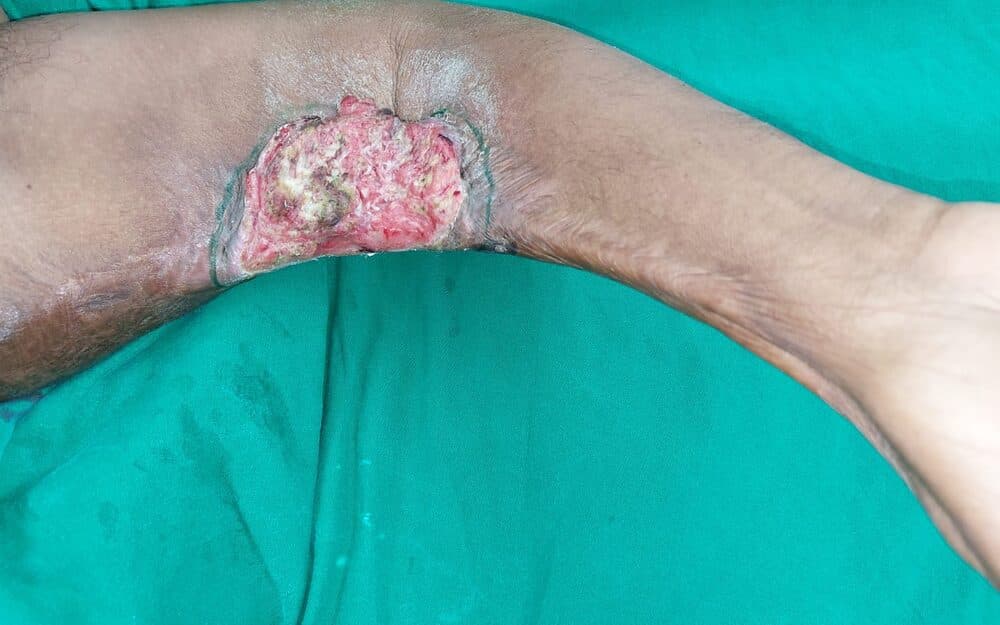
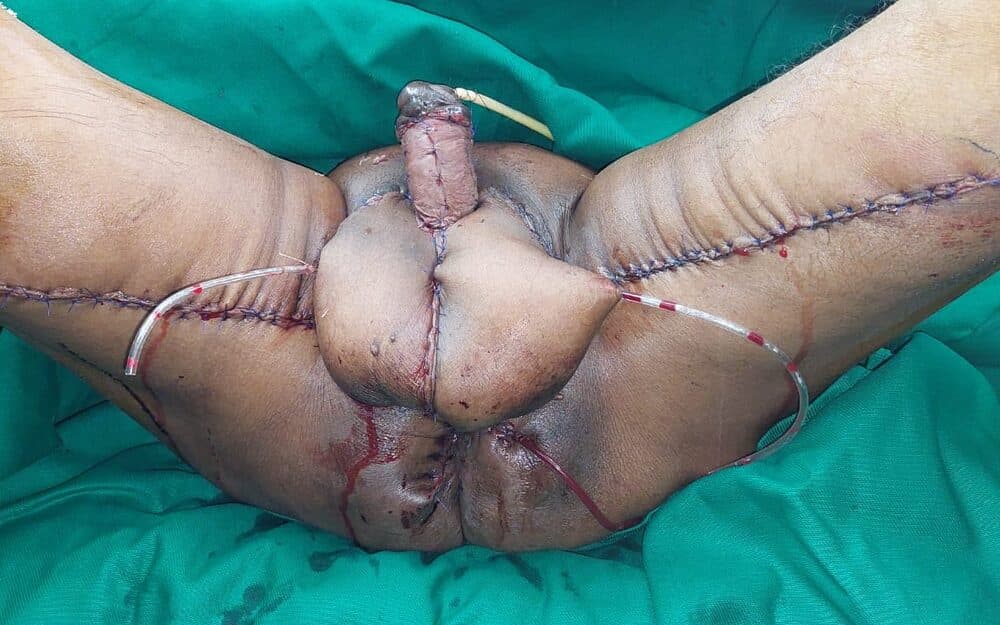
Grafting a deep burn of the back and shoulder in a child
A deep burn across the back and shoulder in a child, excised and grafted, healed with the graft taken and the shoulder still able to move.
Burn surgery · Trunk · Child · 5 min read
- Mechanism
- Burn injury
- Anaesthesia
- General
- Stages
- Placeholder — to be supplied
Presentation
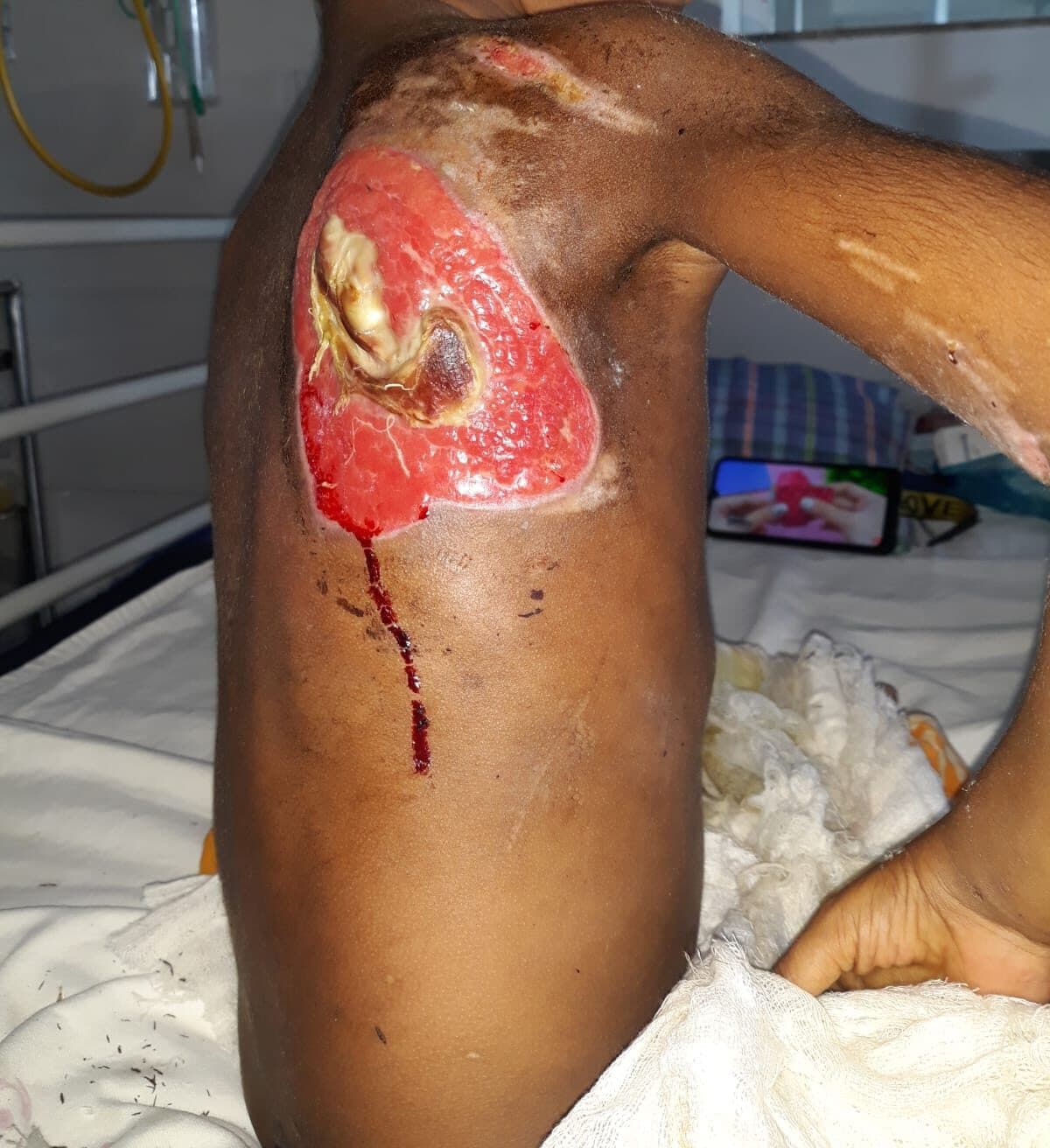
A child was admitted with a deep burn across the back and shoulder. In a child the concern is not only the wound but where it sits: a burn crossing the shoulder will contract as it heals and as the child grows, and a contracture across a joint in a growing body does not stay still — it tightens over years.
A deep burn across the posterior shoulder and upper back with slough and non-viable tissue in the wound, and surrounding areas already healing with early scarring. The wound would not epithelialise from its margins at this depth, so it needed excision and grafting rather than dressings.
Procedure
The burn was excised down to viable, bleeding tissue and resurfaced with a split-thickness graft. Excising deep burn early rather than waiting for it to separate shortens the time the child spends with an open wound, which is what drives infection and scarring. Across the shoulder the graft was applied with the joint in mind, since the position it heals in is the position it will hold.
- AdmissionBurn assessed; dressings and wound care commenced
- OperationBurn excised to viable tissue and split-thickness graft applied
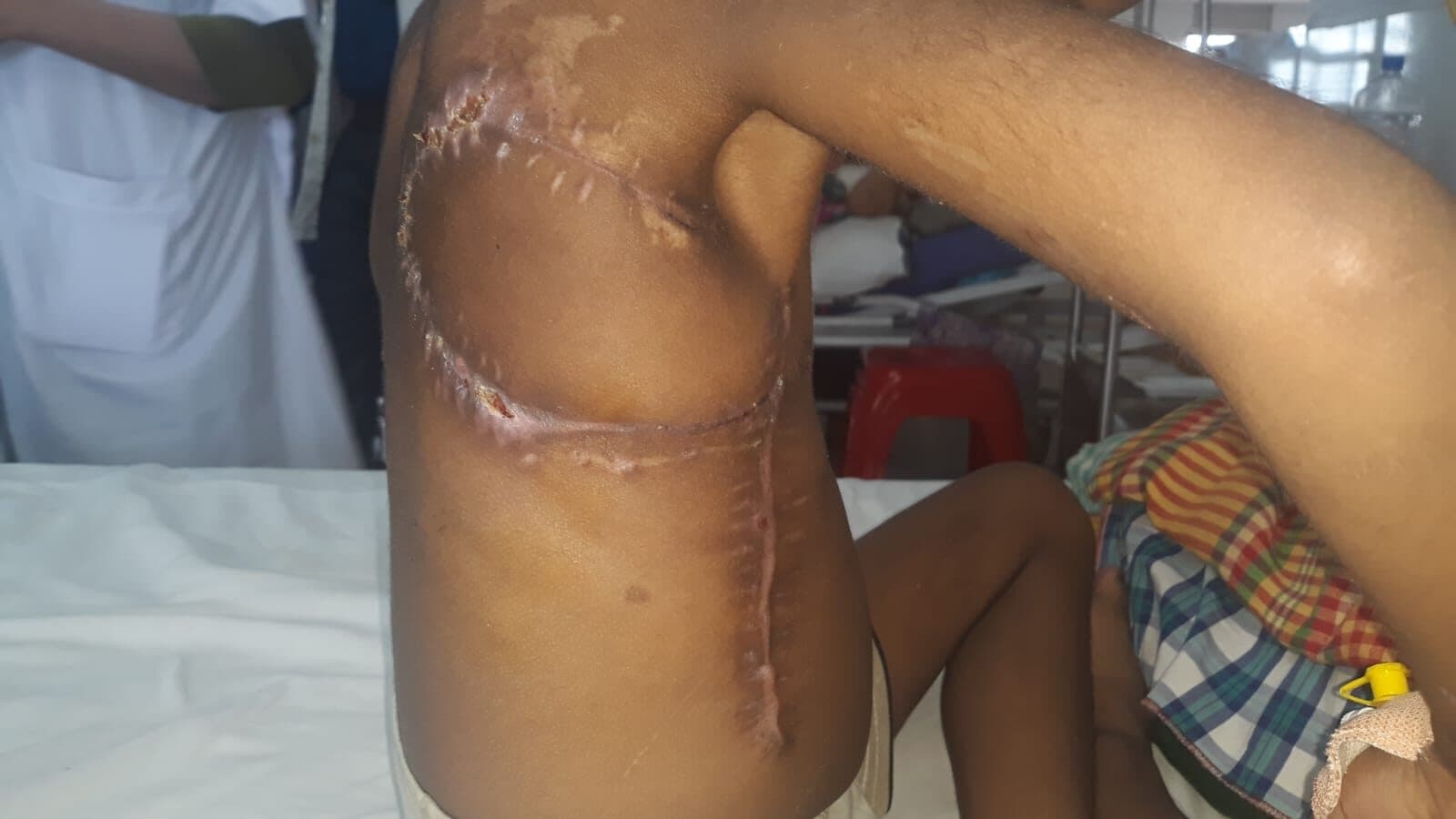
- HealingGraft taken across the shoulder and back
Outcome
The graft took across the back and shoulder and the wound healed. Scar maturation, shoulder range and the need for later release are placeholder — in a child this needs following through growth, and those records are the surgeon’s to supply.
Clinical images are blurred until you choose to view them. Each is labelled with its timepoint.
Placeholder — to be replaced with the words of the child’s parents, given with consent.
Surgeon's note
A burn in a child is not finished when the graft takes. Scar contracts, and a child grows, and a graft across a shoulder that looks entirely satisfactory at three months can tether the joint two years later. What decides the long-term result is splinting, pressure garments and follow-up through growth — the part that depends on whether the family can keep coming back, which is often the real determinant of outcome rather than anything done in theatre.
Consent
CONSENT PENDING — this photograph is published for build purposes only and must not go live until written consent is on file. Parental consent is required for a paediatric case.
These cases are published for clinical and educational purposes. Every patient, injury and recovery is different: the results shown are individual outcomes and are not a prediction or guarantee of the result of any other person’s treatment. All surgery carries risk, which is discussed in full during consultation.