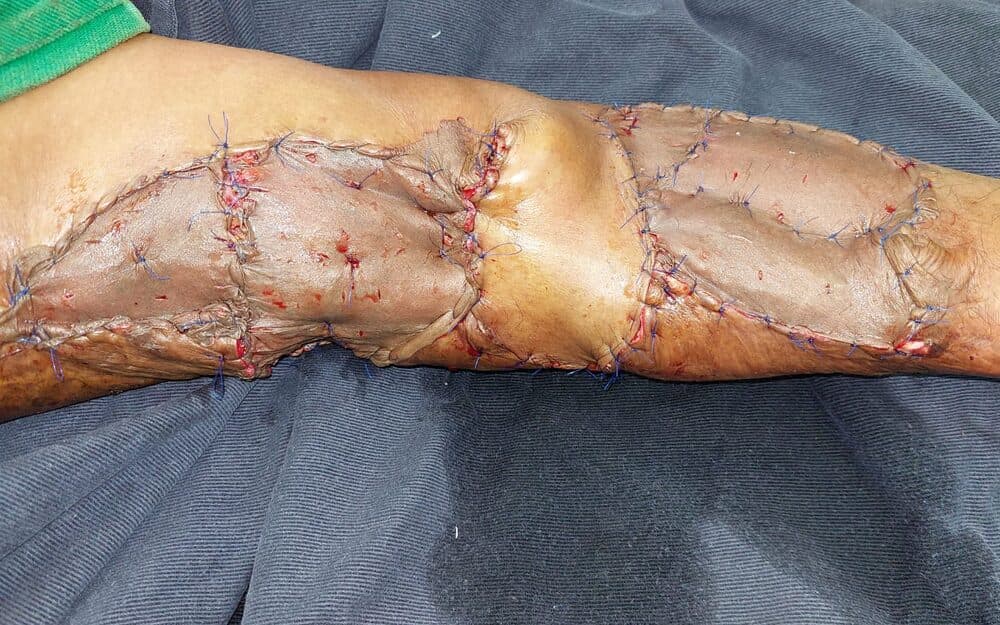
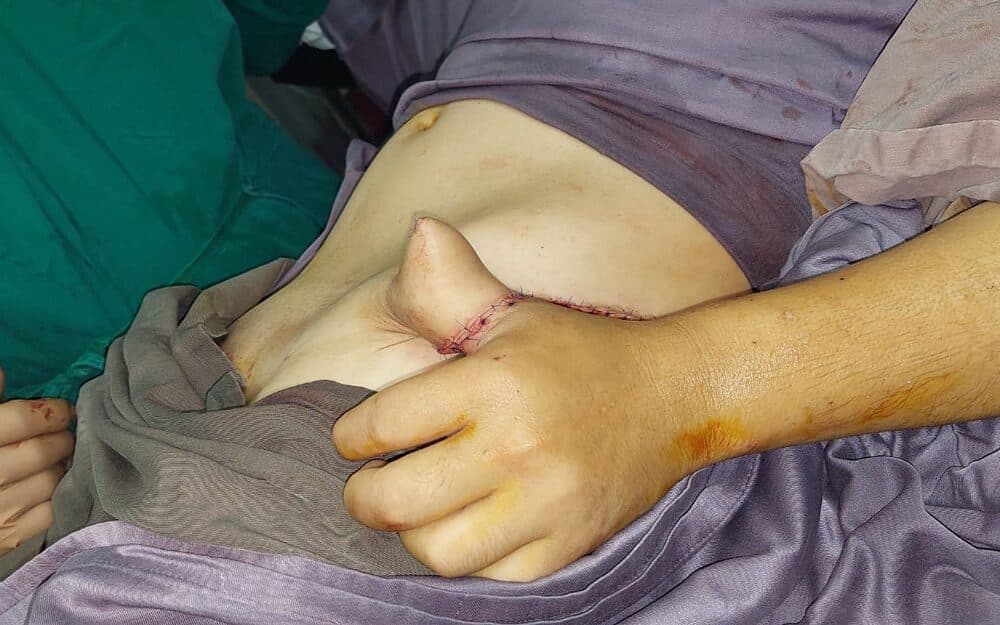
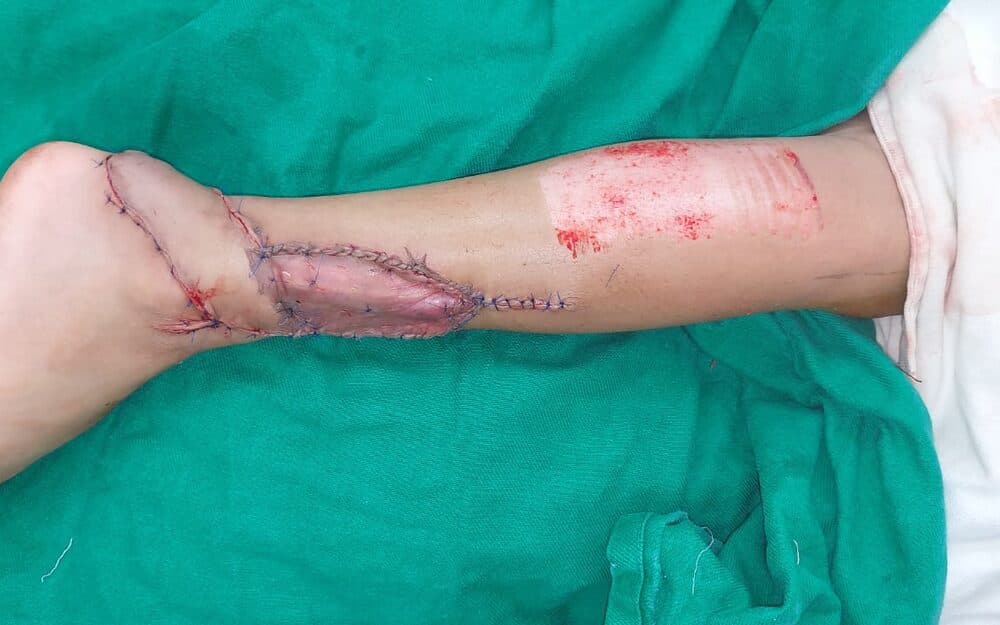
Perineal reconstruction with bilateral thigh flaps after extensive débridement
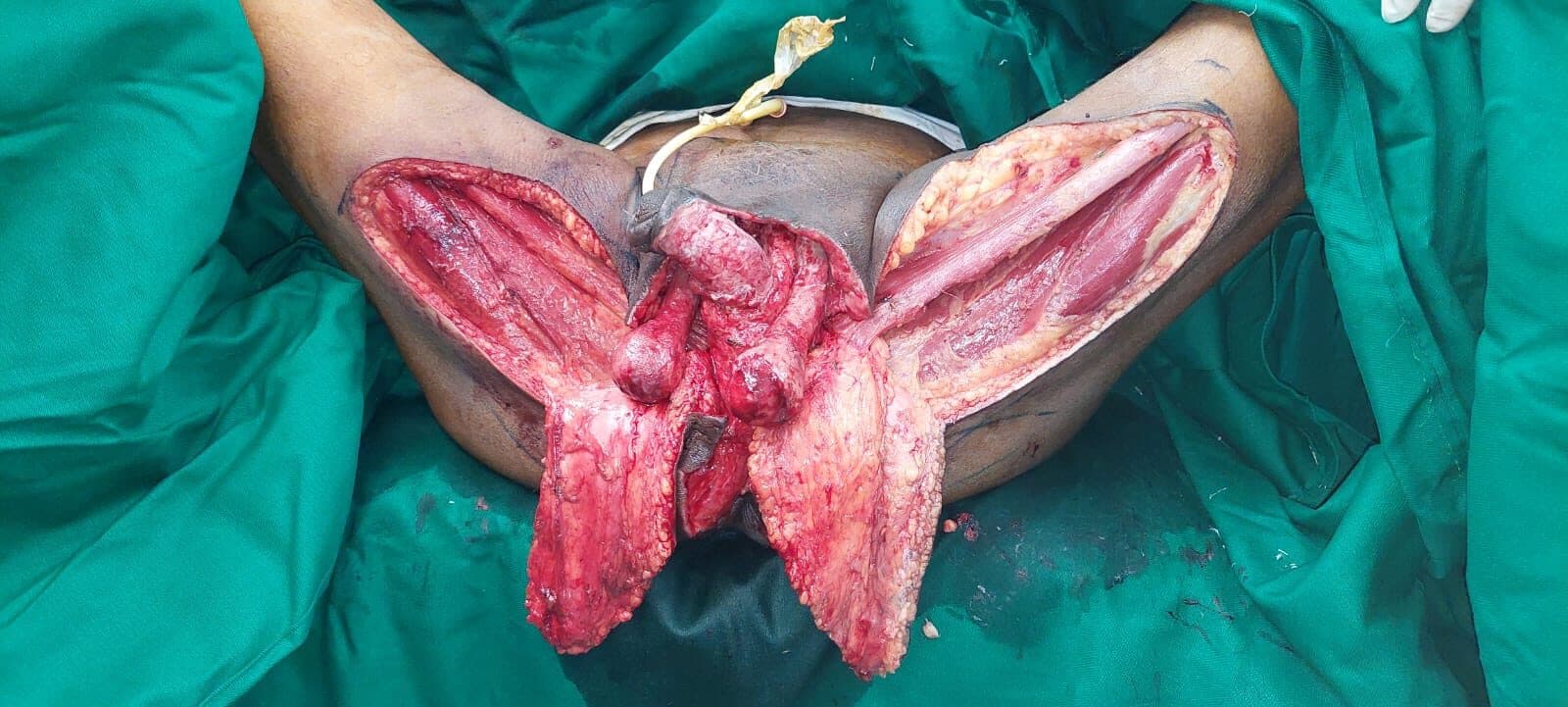
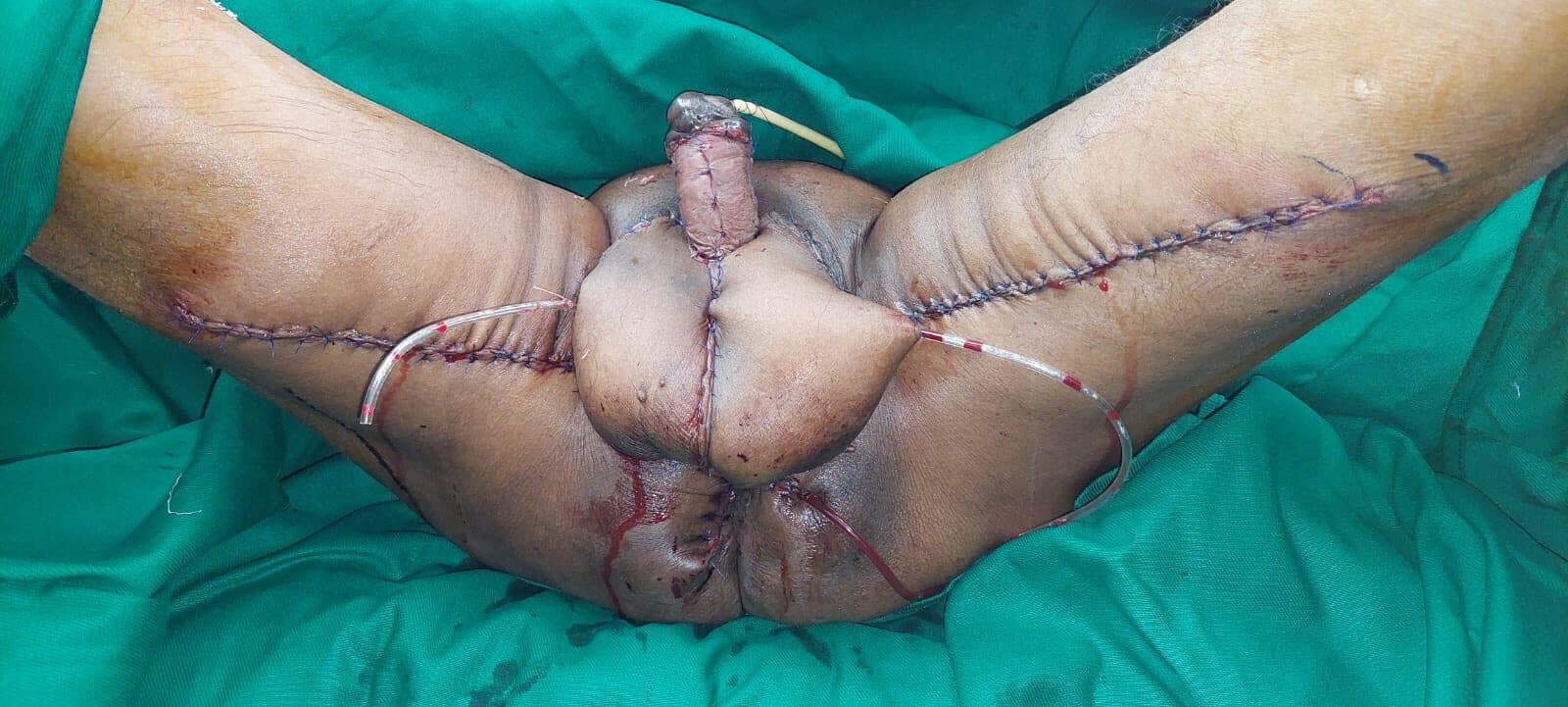
A large perineal and scrotal defect left after débridement of a necrotising soft-tissue infection, closed in a single stage with fasciocutaneous flaps raised from both thighs, measured at 18 × 8 cm and 20 × 9 cm.
Flap reconstruction · Perineum · Adult · 6 min read
- Mechanism
- Necrotising soft-tissue infection of the perineum
- Anaesthesia
- General
- Stages
- Single stage reconstruction
Presentation
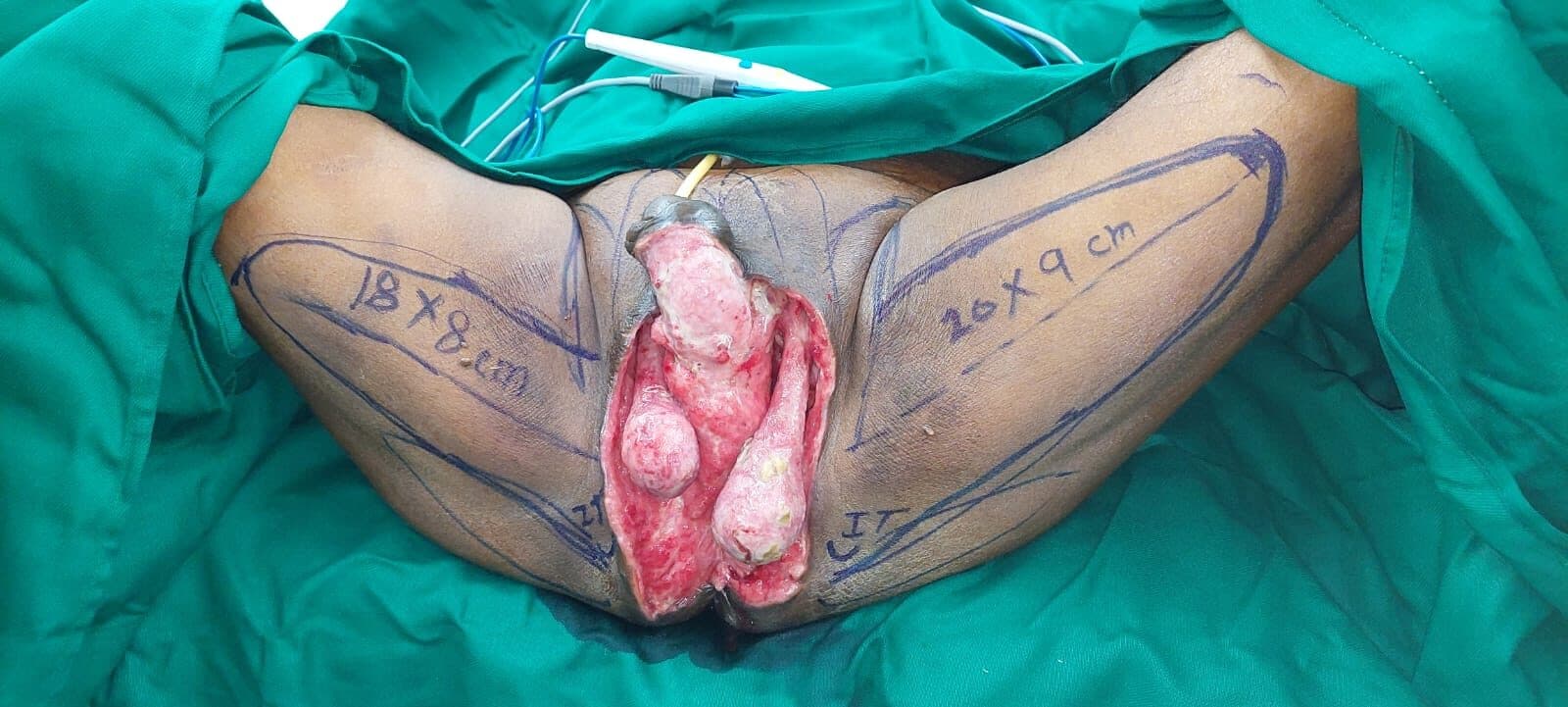
The patient was left with a large perineal and scrotal defect after the débridement required to control a necrotising soft-tissue infection. The débridement is not the difficult decision — infected tissue has to go, and going back a second time is safer than leaving any behind. The difficulty is what follows: a defect of this size in this location will not granulate closed in any reasonable time, and exposed testes need cover.
Extensive full-thickness soft-tissue loss across the perineum and scrotum following serial débridement, with the testes exposed and viable in the base of the wound. Wound bed granulating and clean at the time of reconstruction. Both thighs were uninvolved, giving reliable donor territory on each side; flaps were designed and measured at 18 × 8 cm and 20 × 9 cm.
Procedure
Flaps were designed on each thigh, measured against the defect and marked before any incision — in a defect this size, a flap that turns out 2 cm short cannot be lengthened once it is raised. Each was elevated as a fasciocutaneous flap, transposed medially to meet in the midline, and inset to cover the exposed testes and resurface the perineum. Suction drains were placed on both sides: a closed perineal wound with dead space beneath it collects, and a collection under a flap becomes an infection under a flap.
- PresentationNecrotising infection; urgent débridement and stabilisation
- Serial débridementRepeated until the wound bed was clean and no further necrosis declared
- ReconstructionBilateral thigh flaps raised, transposed and inset with drains
Outcome
The defect was closed in a single stage with vascularised tissue on both sides and the testes covered. Healing, donor-site morbidity and function are placeholder and await the surgeon’s follow-up records.
Clinical images are blurred until you choose to view them. Each is labelled with its timepoint.
Placeholder — to be replaced with the patient’s own words, given with consent.
Surgeon's note
The temptation in perineal defects is to keep dressing them and hope granulation does the work. It sometimes does, over months, with the patient immobile and the wound repeatedly soiled. Flap cover in one stage shortens that to weeks and gives tissue that tolerates sitting and hygiene. The judgement is timing: reconstruct too early, onto a bed where the infection has not fully declared, and the flaps sit on necrotic tissue. Serial débridement first, reconstruction once the wound is quiet.
Consent
CONSENT PENDING — this photograph is published for build purposes only and must not go live until written consent is on file.
These cases are published for clinical and educational purposes. Every patient, injury and recovery is different: the results shown are individual outcomes and are not a prediction or guarantee of the result of any other person’s treatment. All surgery carries risk, which is discussed in full during consultation.