Soft-tissue cover of an open tibial fracture held on an external fixator
An open tibial fracture stabilised on an external fixator with soft-tissue loss over the fracture site, covered with flap and graft to leave a healed limb rather than an amputation.
Limb salvage · Lower limb · Adult · 7 min read
- Mechanism
- High-energy open tibial fracture
- Anaesthesia
- General
- Stages
- Staged — débridement, then cover
Presentation
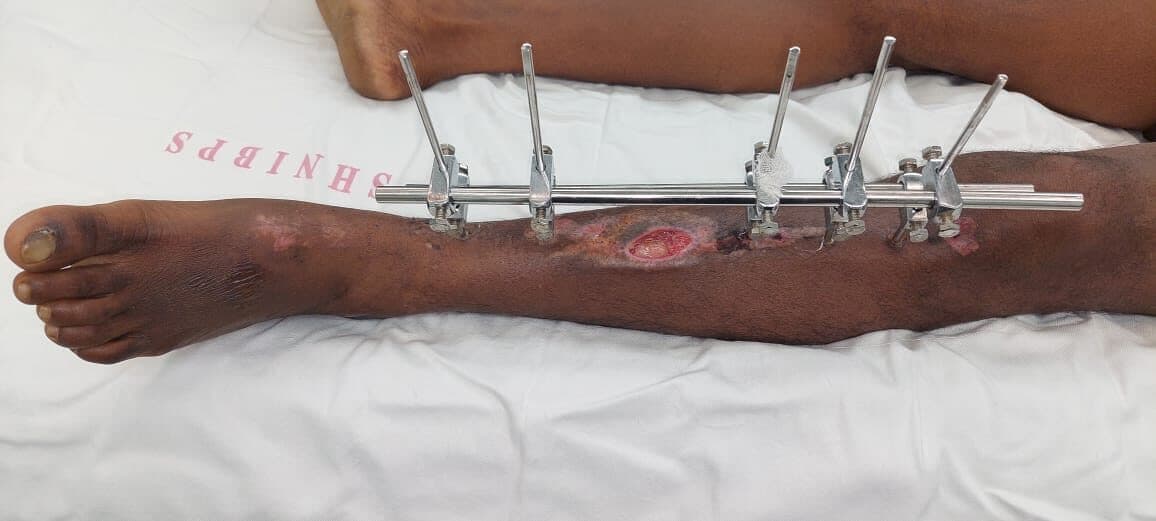
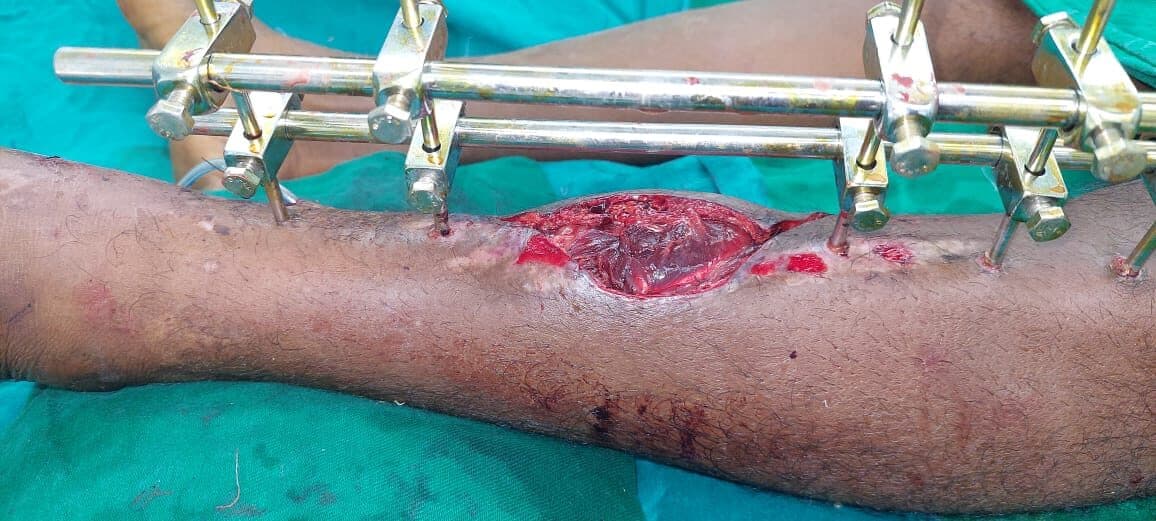
The patient presented with an open tibial fracture stabilised on an external fixator, with soft-tissue loss over the fracture site. An open fracture is a soft-tissue injury that happens to involve bone: the fracture can be held indefinitely on a frame, but bone left uncovered becomes infected bone, and infected bone in the tibia is the usual road to amputation.
Open tibial fracture held in an external fixator, with a soft-tissue defect over the fracture site and bone exposed within it. Pin sites intact. The limb was perfused distally with the foot viable, which is what made salvage worth attempting rather than proceeding to amputation.
Procedure
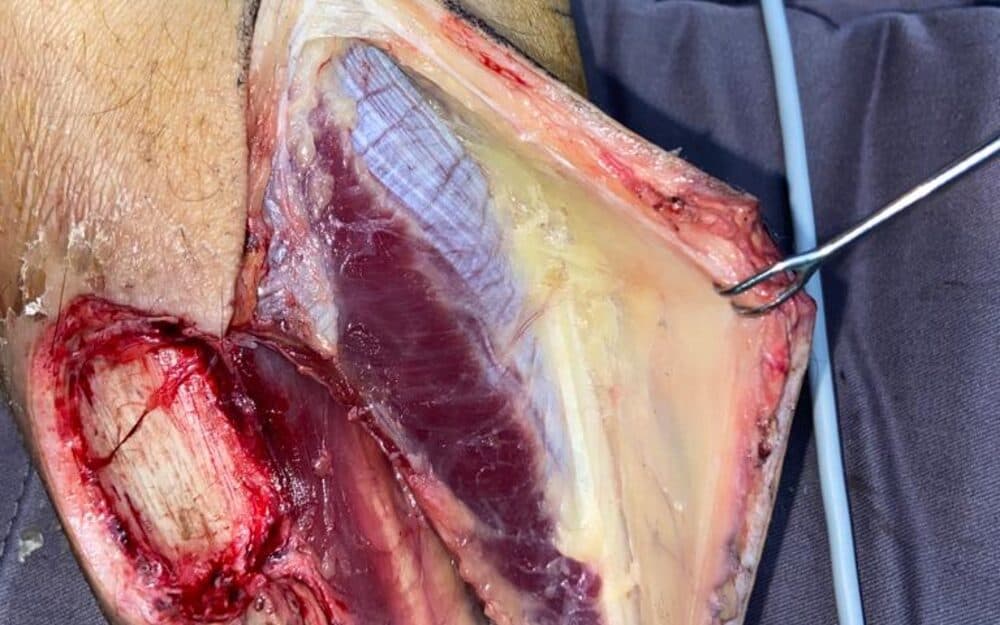
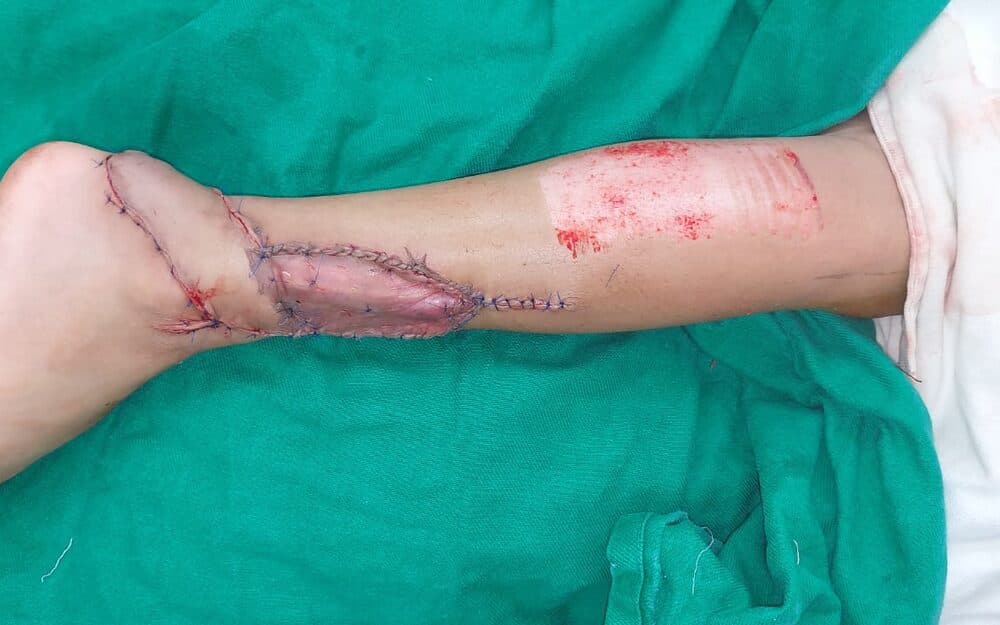
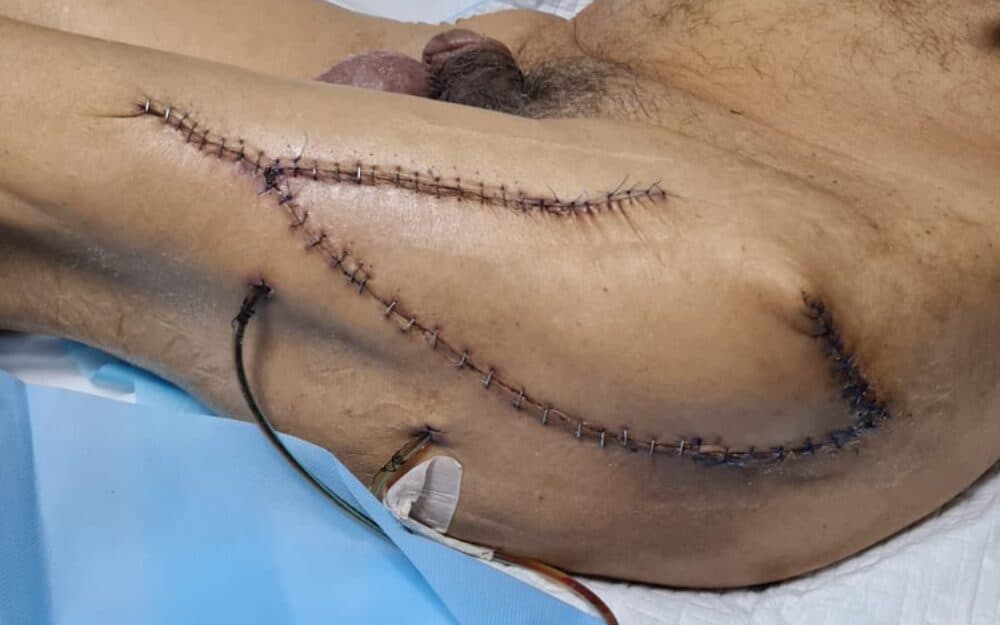
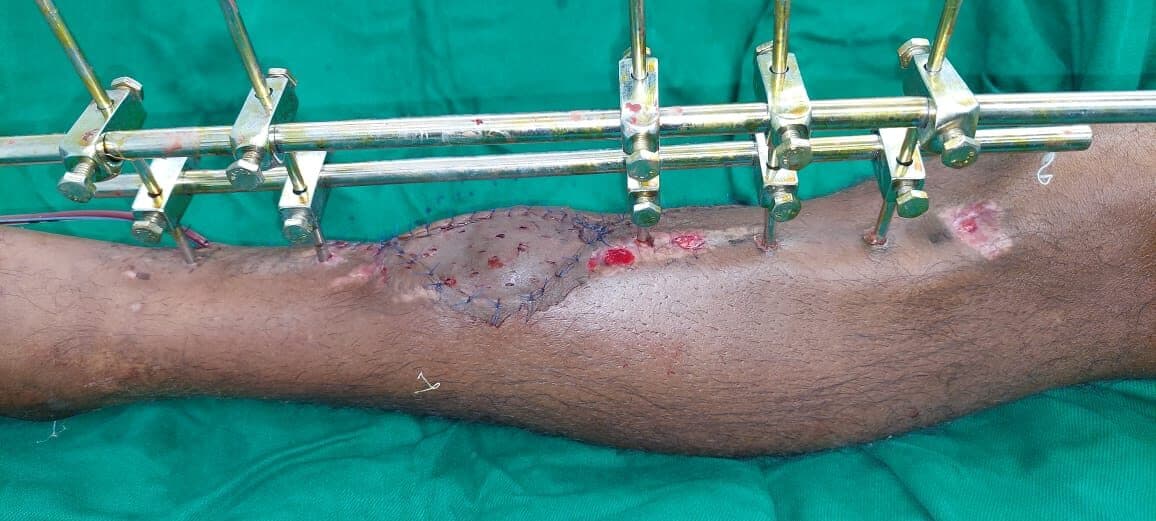
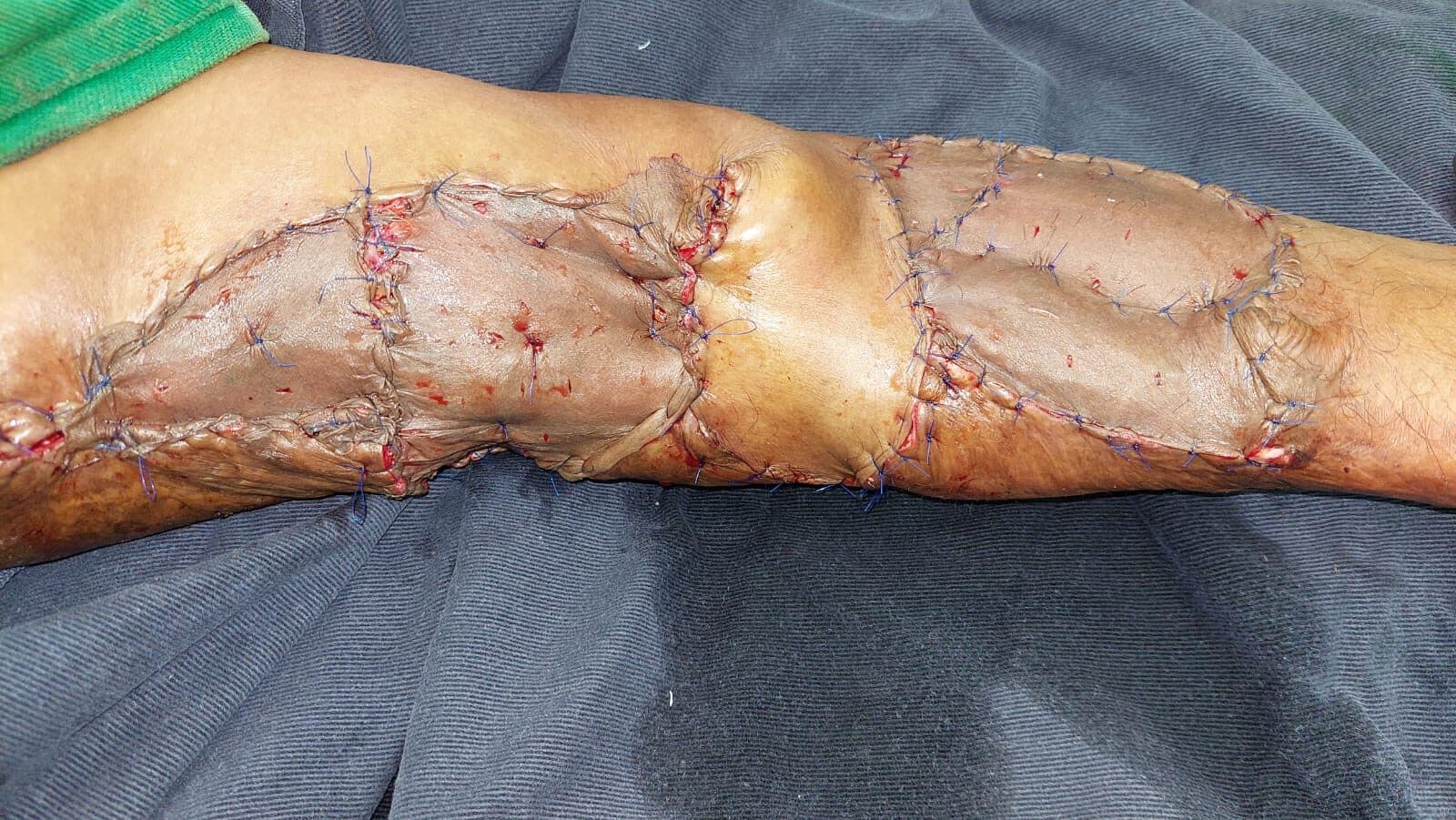
Débridement came first and was not a single event — the extent of non-viable tissue in a high-energy injury declares itself over days, and covering a wound that is still declaring guarantees a flap sitting on dead tissue. Once the wound was clean, soft-tissue cover was brought over the fracture site while the external fixator continued to hold the bone, and resurfacing was completed across the remaining defect. The frame stays until the soft tissues are healed; taking it down early to make the reconstruction easier is a trade the bone pays for.
- PresentationOpen fracture stabilised on an external fixator
- DébridementNon-viable tissue excised; wound assessed for cover
- CoverSoft-tissue reconstruction over the fracture site
- Later stageResurfacing completed across the limb
Outcome
The limb was salvaged with healed soft-tissue cover over the fracture site. Union, frame removal, weight-bearing and function are placeholder and await the surgeon’s follow-up records.
Clinical images are blurred until you choose to view them. Each is labelled with its timepoint.
Placeholder — to be replaced with the patient’s own words, given with consent.
Surgeon's note
Salvage or amputation is decided by the foot, not the tibia. A perfused foot with protective sensation is worth a long reconstruction; an insensate one usually is not, and a patient carried through eighteen months of operations to reach a limb they cannot feel has been badly served. Once salvage is chosen, the sequence is not negotiable: débride until the wound stops declaring, cover before the bone becomes infected, and keep the frame until the soft tissues are healed.
Consent
CONSENT PENDING — this photograph is published for build purposes only and must not go live until written consent is on file.
These cases are published for clinical and educational purposes. Every patient, injury and recovery is different: the results shown are individual outcomes and are not a prediction or guarantee of the result of any other person’s treatment. All surgery carries risk, which is discussed in full during consultation.