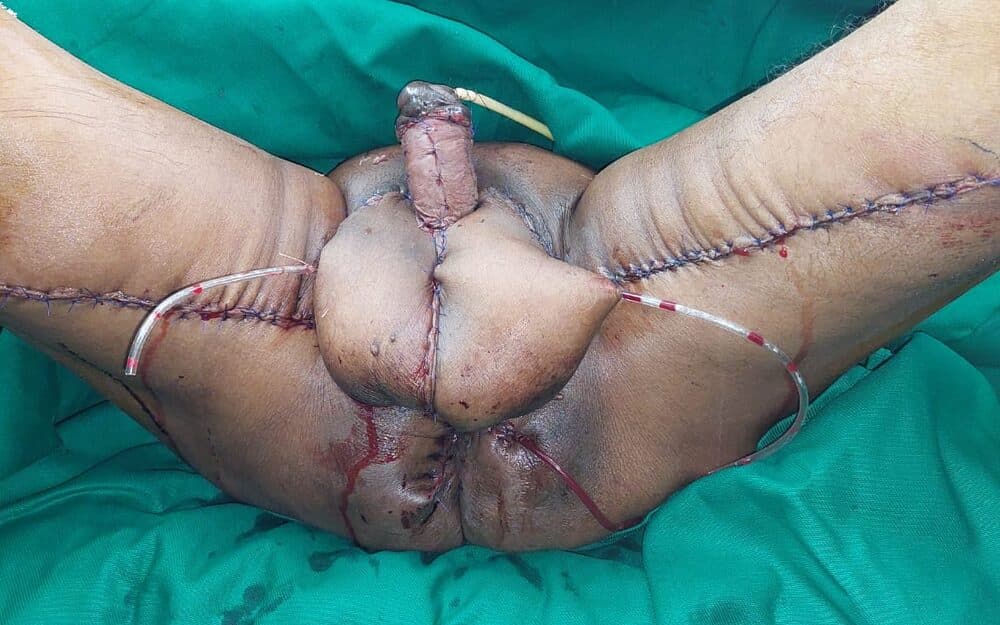
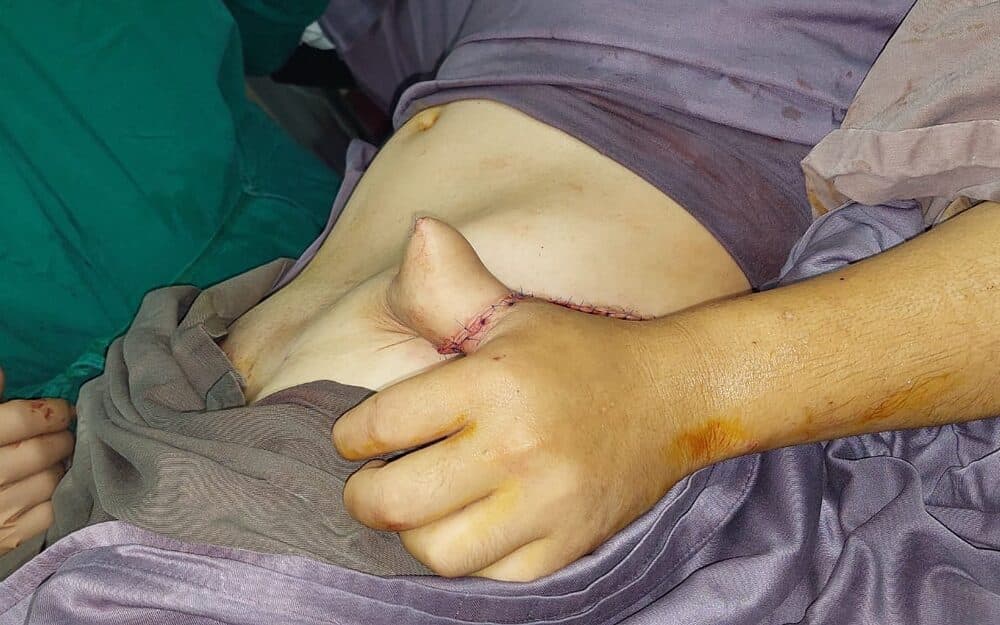
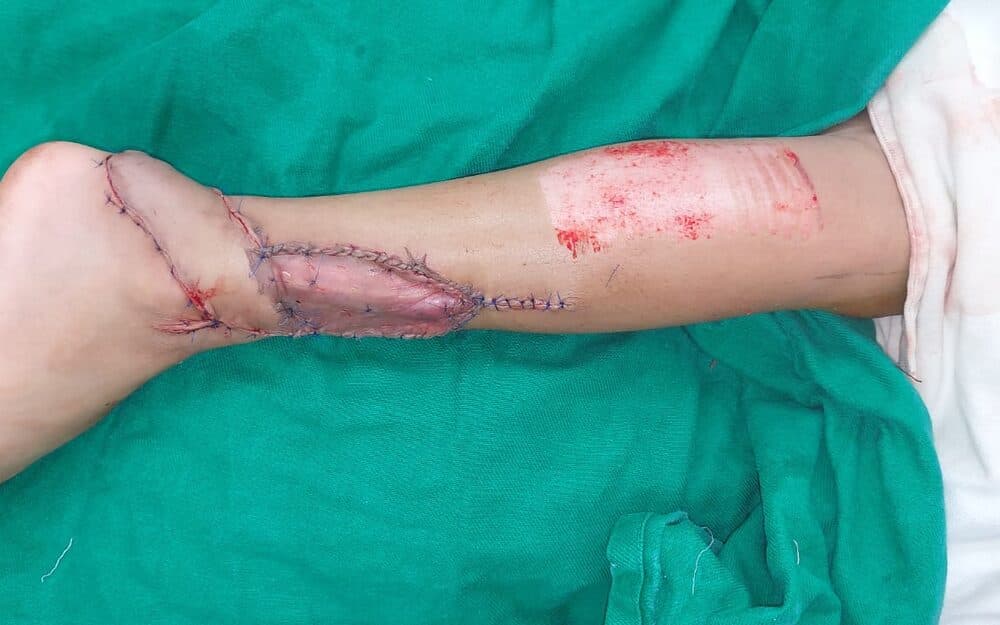
Excision and flap closure of a groin and upper thigh lesion
A lesion of the groin and upper thigh excised widely and the resulting defect closed with a local flap over a suction drain.
Flap reconstruction · Lower limb · Adult · Male · 4 min read
- Mechanism
- Placeholder — diagnosis and mechanism to be supplied
- Anaesthesia
- General
- Stages
- Single stage
Presentation
The patient presented with a lesion of the groin and upper thigh requiring wide excision. The difficulty in this region is not the excision but what follows it: the groin moves with every step, sits in a crease, and is difficult to keep clean, so a closure under tension there breaks down.
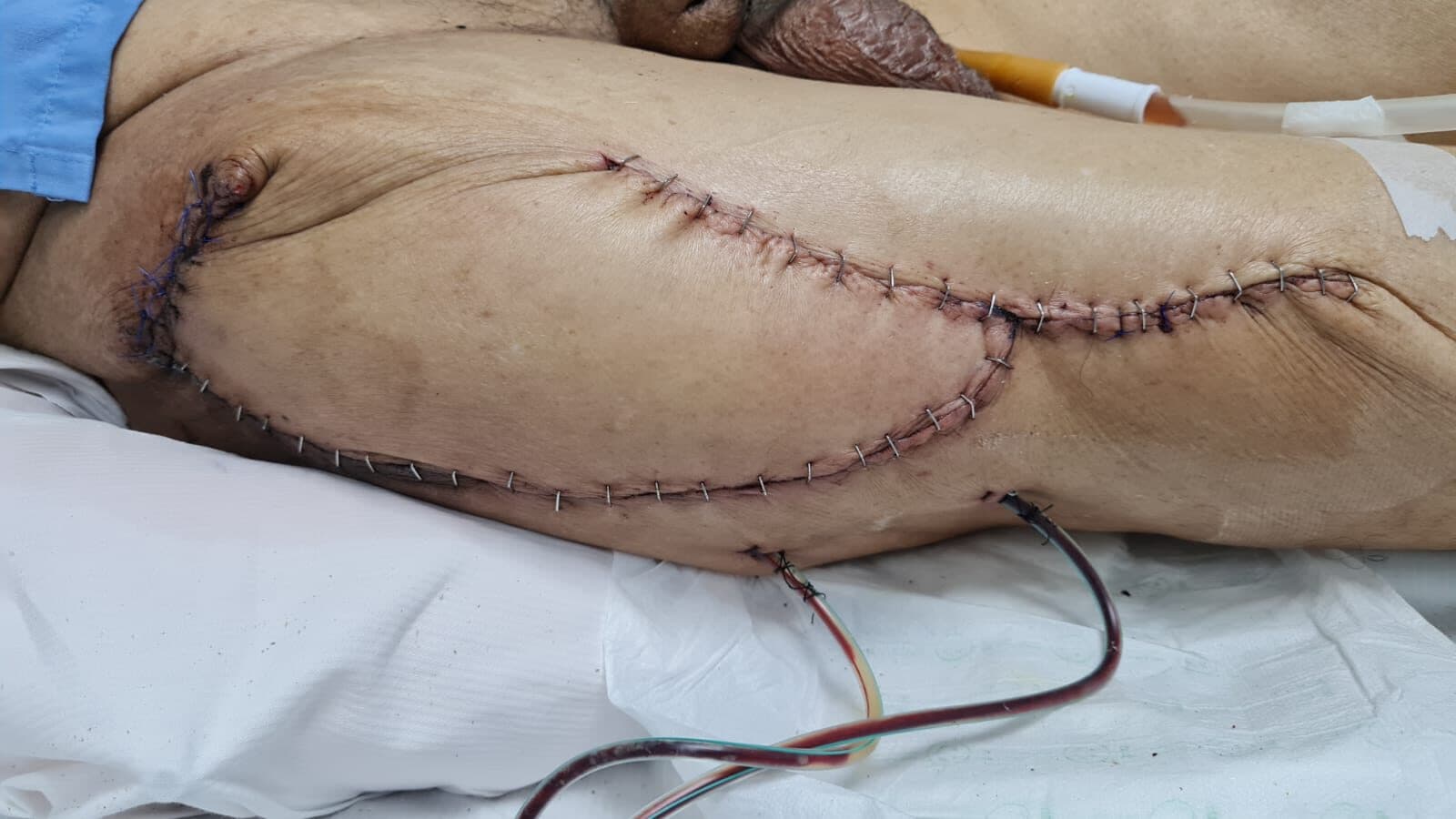
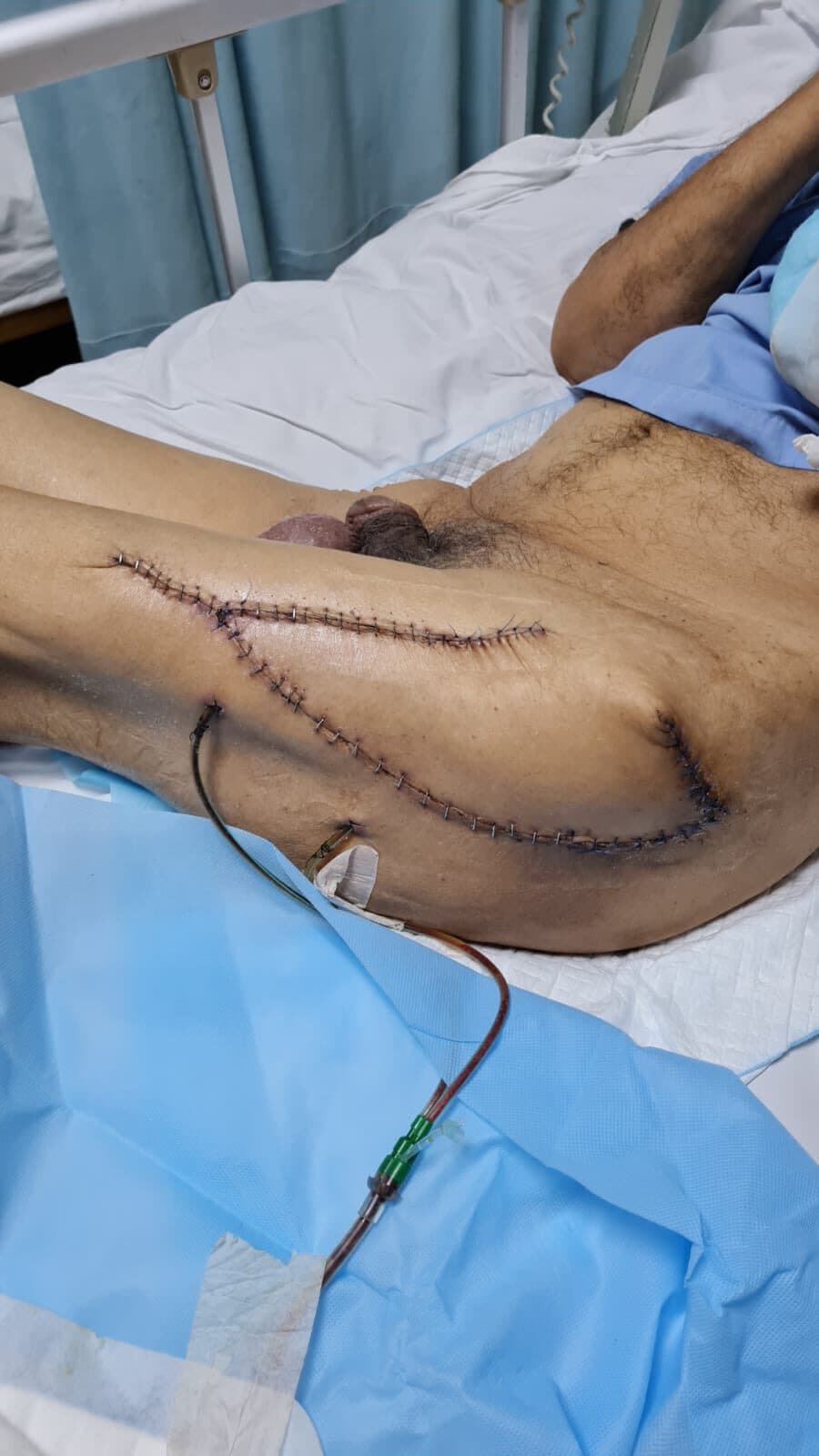
A lesion of the groin extending onto the upper thigh, with the planned excision margin marked pre-operatively. Surrounding thigh skin was uninvolved and mobile, giving a local flap option for closure once the defect size was known.
Procedure
The lesion was excised with the planned margin and the defect closed with a local flap raised from the adjacent thigh, rather than pulling the wound edges together under tension. A suction drain was placed: the groin has dead space that collects, and a collection in a crease that cannot be kept dry becomes an infected wound.
- AssessmentLesion assessed and excision margins marked
- OperationWide excision, local flap raised and inset over a drain
Outcome
The defect was closed in a single stage with a local flap and a drain sited. Histology, healing and follow-up are placeholder and await the surgeon’s records.
Clinical images are blurred until you choose to view them. Each is labelled with its timepoint.
Surgeon's note
Closing a groin defect under tension is the mistake this operation is designed to avoid. The wound is in a crease, it moves constantly, and tension plus movement plus moisture is how a clean excision turns into a wound that takes months. Raising a local flap costs a longer scar and buys a closure that holds.
Consent
Published with the written consent of the patient.
These cases are published for clinical and educational purposes. Every patient, injury and recovery is different: the results shown are individual outcomes and are not a prediction or guarantee of the result of any other person’s treatment. All surgery carries risk, which is discussed in full during consultation.