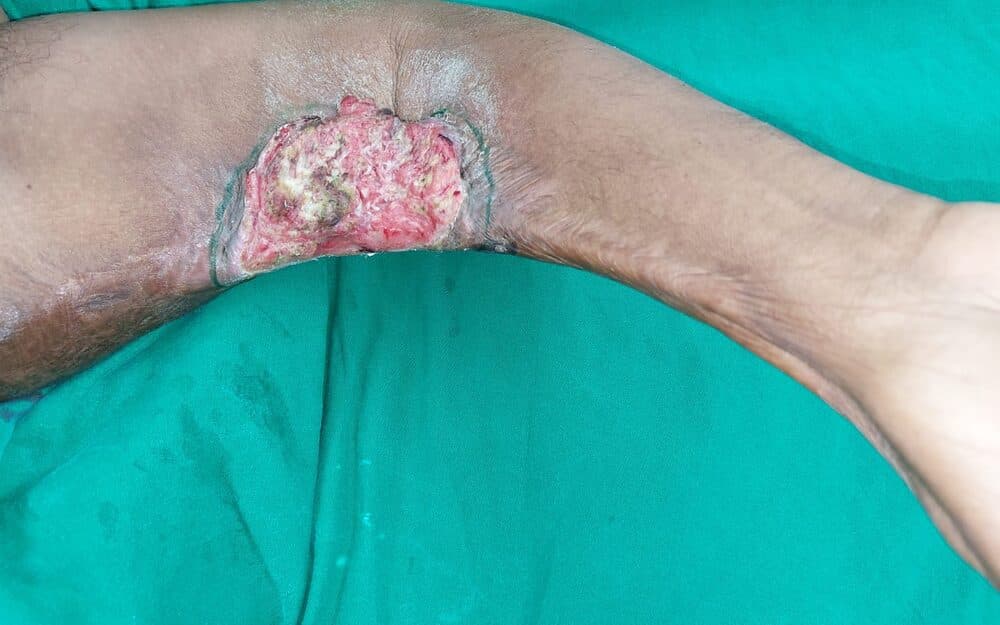
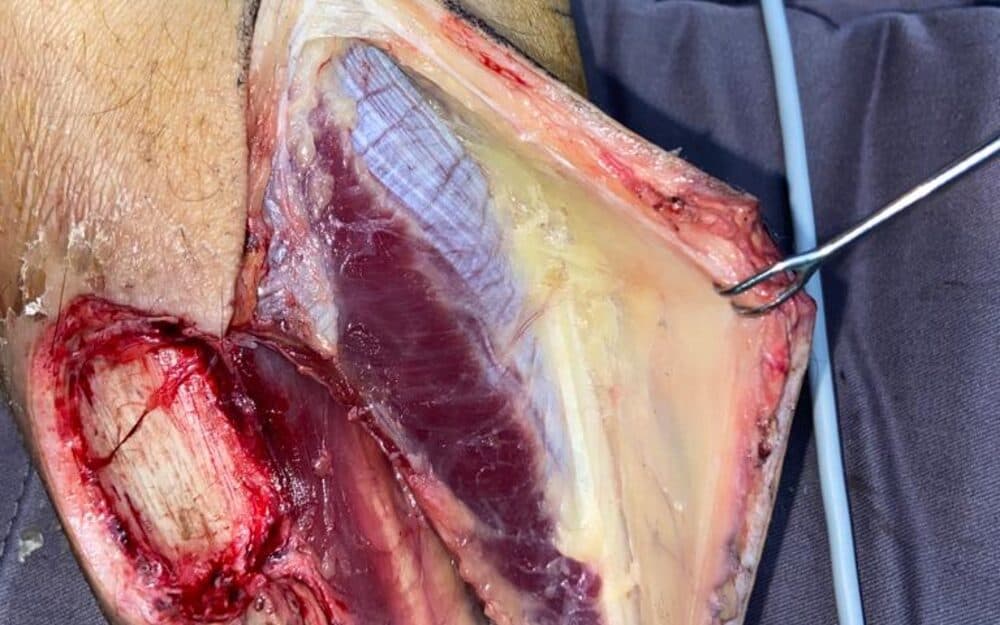
Scalp defect over the vertex with bone at its base
A full-thickness scalp defect over the vertex reaching down to bone, assessed for cover in a site where a graft will not take on bare cortex.
Wound reconstruction · Head & neck · Adult · 4 min read
- Mechanism
- Placeholder — mechanism to be supplied
- Anaesthesia
- General
- Stages
- Placeholder — to be supplied
Presentation
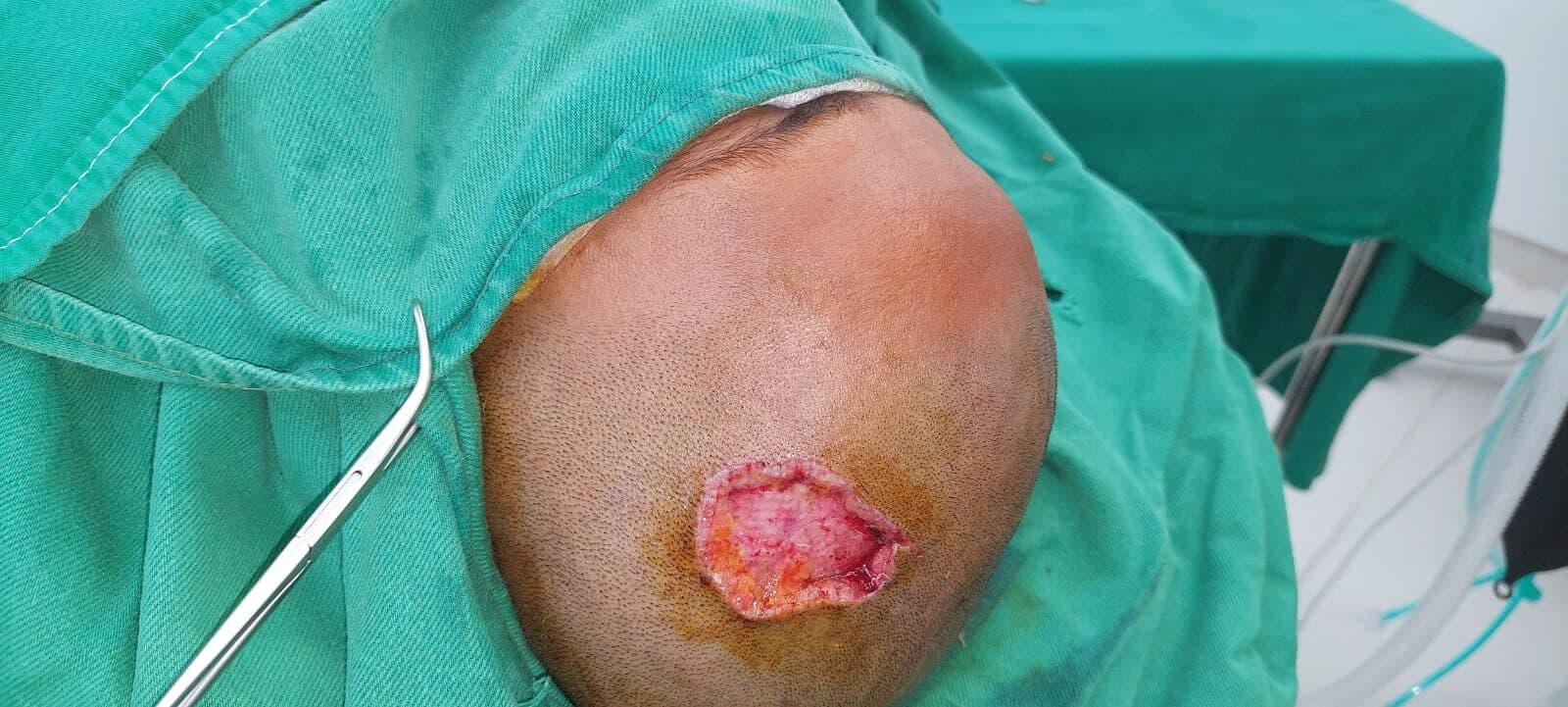
The patient presented with a full-thickness scalp defect over the vertex. The scalp is thin and tightly bound down over the skull, so a defect here loses its options quickly: there is no laxity to close it directly, and once the periosteum is gone a graft has nothing to take on.
A full-thickness scalp defect over the vertex with bone visible in the base of the wound and no periosteum remaining over it. Surrounding scalp intact but immobile. Wound margins were assessed for viability before any decision about cover.
Procedure
The wound was débrided and the base examined for viable periosteum. That finding decides the operation: where periosteum remains, a graft will take; where the cortex is bare and dry, it will not, and the defect needs vascularised tissue — a local scalp flap where the surrounding scalp allows it, or free tissue transfer where it does not. Burring the outer table back to punctate bleeding is the intermediate option, and it costs time before definitive cover.
- AssessmentDefect assessed; base examined for periosteum and bleeding bone
- OperationWound débrided and prepared for reconstruction
Outcome
The wound was débrided and prepared for reconstruction. Definitive cover and healing are placeholder and await the surgeon’s records.
Placeholder — to be replaced with the patient’s own words, given with consent.
Surgeon's note
The single question over a scalp defect is whether the bone at the base is bleeding. Everything else follows from it — graft, local flap, or free tissue — and the decision costs nothing to make properly at the first operation and a great deal to get wrong. Grafting hopefully onto dry cortex is the commonest error, and it buys the patient a failed graft and a delay.
Consent
CONSENT PENDING — this photograph is published for build purposes only and must not go live until written consent is on file.
These cases are published for clinical and educational purposes. Every patient, injury and recovery is different: the results shown are individual outcomes and are not a prediction or guarantee of the result of any other person’s treatment. All surgery carries risk, which is discussed in full during consultation.