Abdominoplasty for a redundant abdominal apron after weight loss
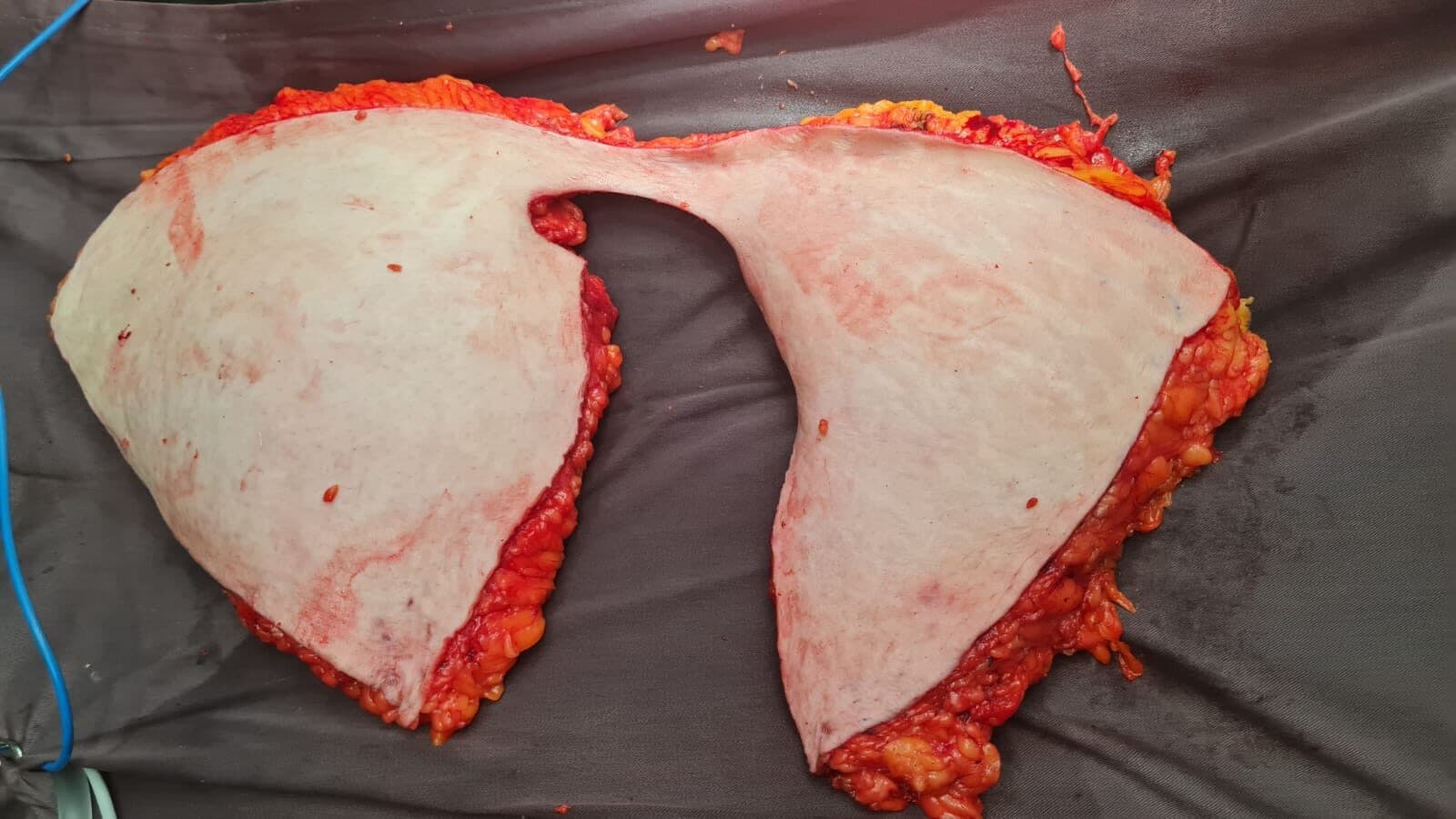
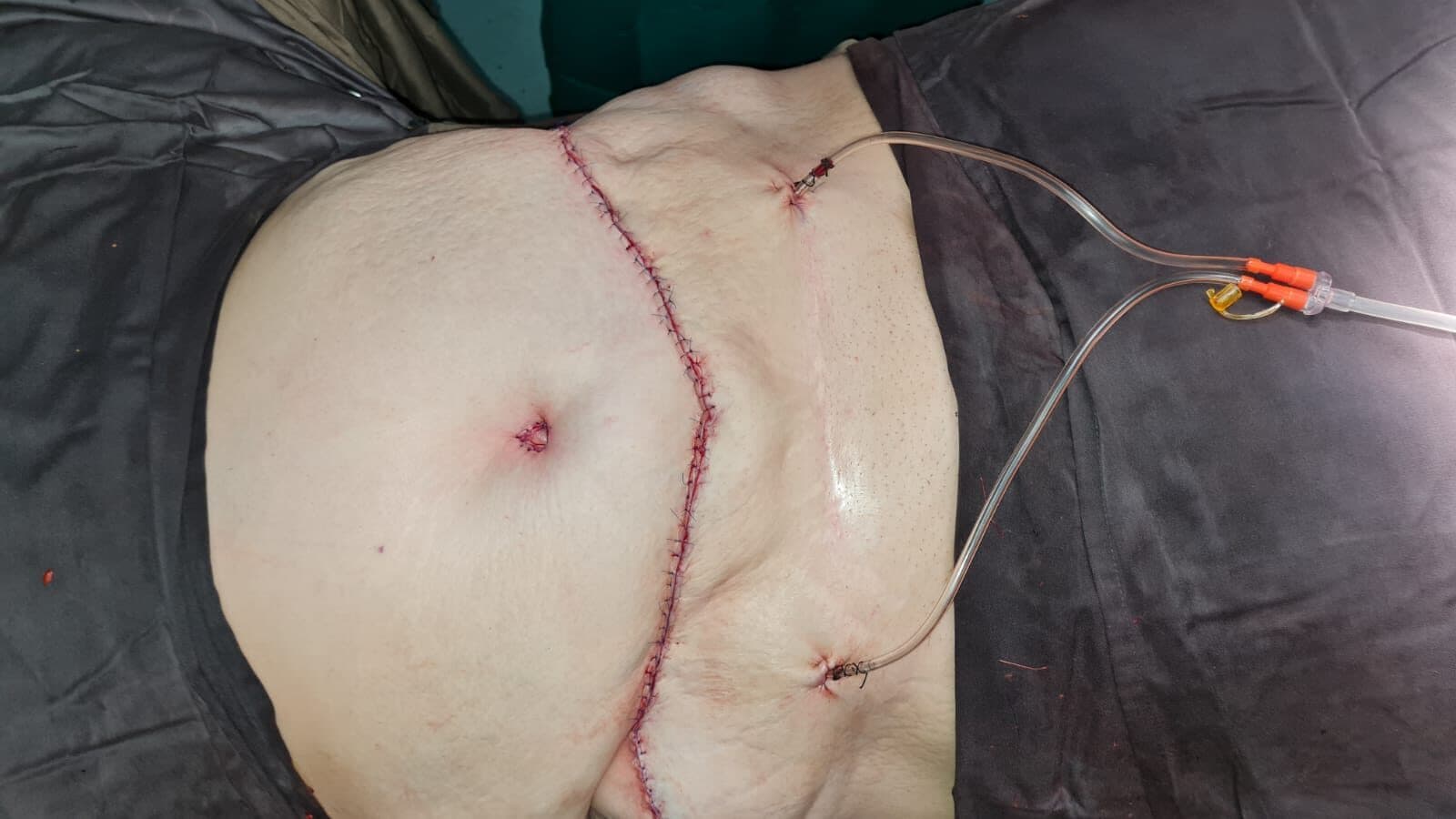
A large overhanging abdominal apron causing recurrent skin problems and restricting movement, excised as a single specimen with the abdomen closed over suction drains.
Body contouring · Abdomen · Adult · Female · 5 min read
- Mechanism
- Redundant skin and fat following weight loss
- Anaesthesia
- General
- Stages
- Single stage
Presentation
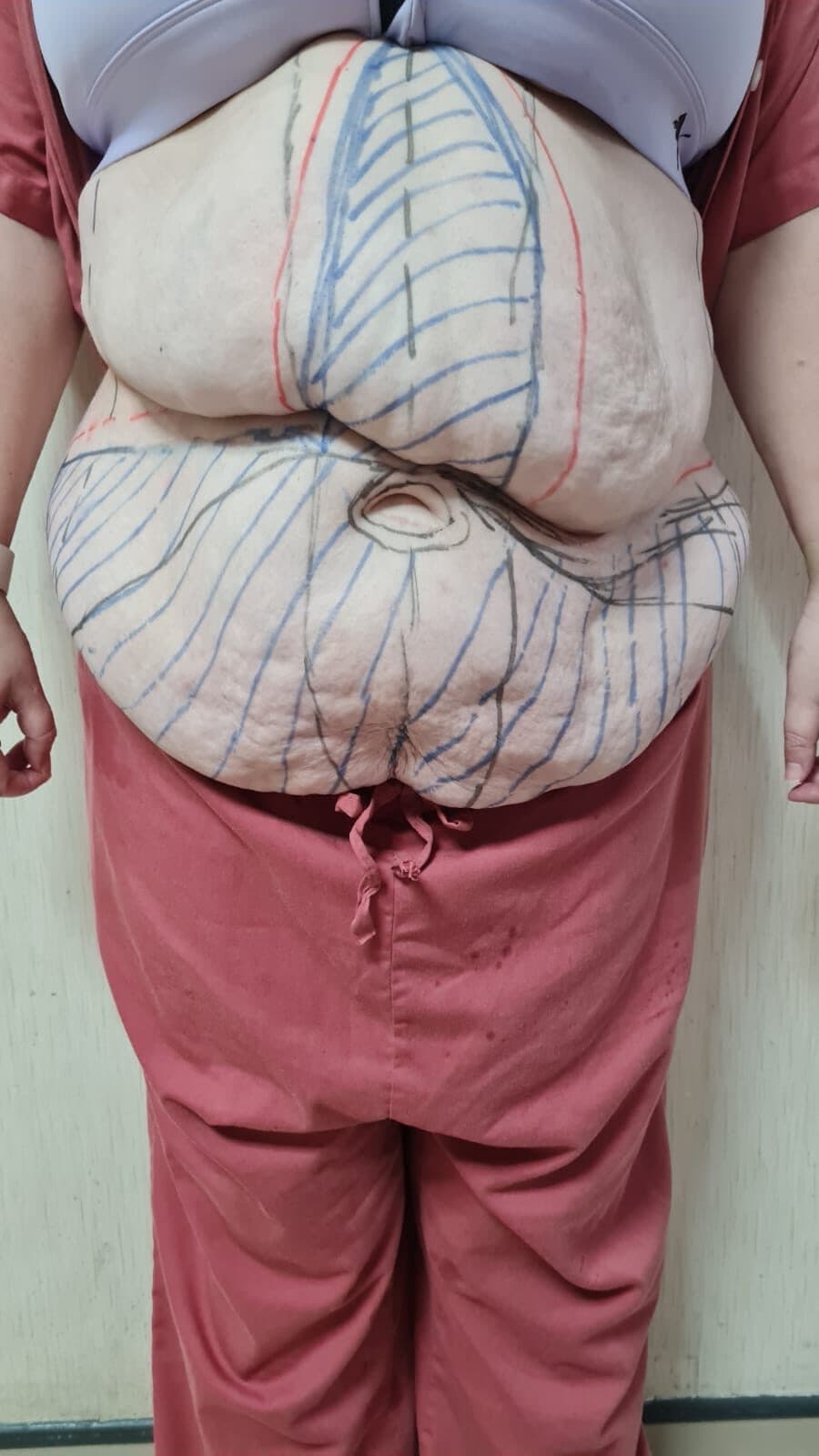
The patient presented with a large redundant abdominal apron. The complaint that brings people to clinic is rarely appearance: it is the skin beneath the fold, which stays damp and breaks down repeatedly, and the weight of the apron itself, which restricts walking and makes ordinary hygiene difficult. Those are the grounds on which this operation is offered, and they are worth stating plainly rather than framing the procedure as cosmetic.
A substantial overhanging panniculus with the skin of the underlying fold affected by recurrent intertrigo. Planned resection marked pre-operatively with the patient standing, since the fold falls differently once supine and marks made on the table do not describe the apron the patient actually lives with.
Procedure
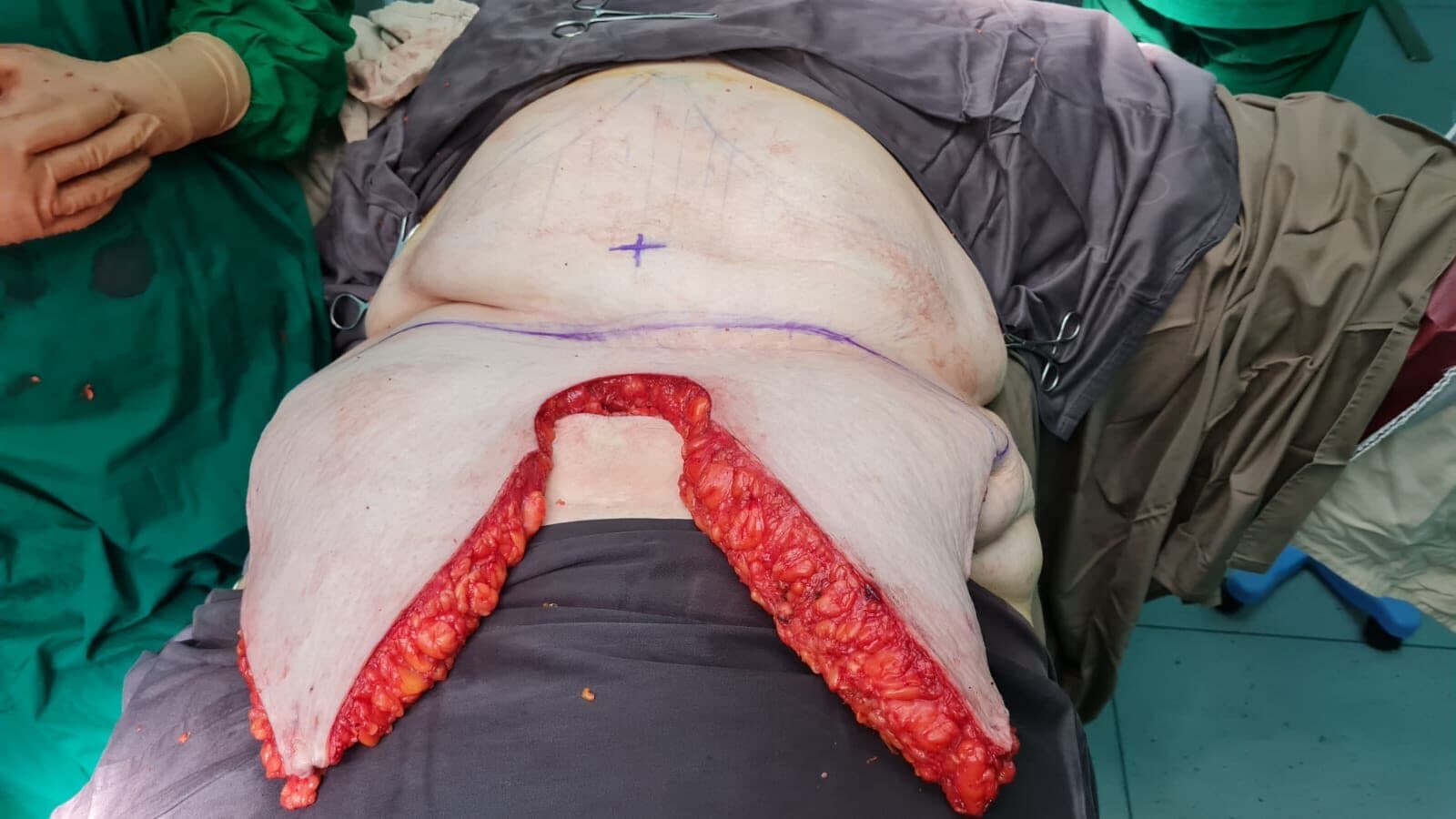
Markings were made with the patient standing, which is the only position in which the apron hangs as it does in life. The resection was carried out as planned and the redundant tissue removed as a single specimen. The abdominal flaps were then advanced and closed, with the umbilicus repositioned, over two suction drains — a resection of this size leaves a large raw surface and a seroma under it is the commonest reason these wounds fail.
- AssessmentSymptoms assessed; resection marked with the patient standing
- OperationApron excised as a single specimen; abdomen closed over drains
- Post-opDrains monitored; mobilisation begun
Outcome
The apron was excised and the abdomen closed in a single stage with drains sited. Wound healing, drain duration, symptom relief and mobility at follow-up are placeholder and await the surgeon’s records.
Clinical images are blurred until you choose to view them. Each is labelled with its timepoint.
Placeholder — to be replaced with the patient’s own words, given with consent.
Surgeon's note
Marking with the patient standing is not a detail. Marks made supine consistently under-resect, because the apron redistributes as soon as the patient lies down, and the result is a fold left behind that reproduces the original complaint. The other point is that this is offered for symptoms — intertrigo, restricted mobility, hygiene — and described in those terms. A large panniculectomy is a real operation with a long wound and a real seroma rate, and it should be indicated by what the patient cannot do, not by how the abdomen looks.
Consent
CONSENT PENDING — this photograph is published for build purposes only and must not go live until written consent is on file.
These cases are published for clinical and educational purposes. Every patient, injury and recovery is different: the results shown are individual outcomes and are not a prediction or guarantee of the result of any other person’s treatment. All surgery carries risk, which is discussed in full during consultation.