Primary repair of a unilateral cleft lip in an infant
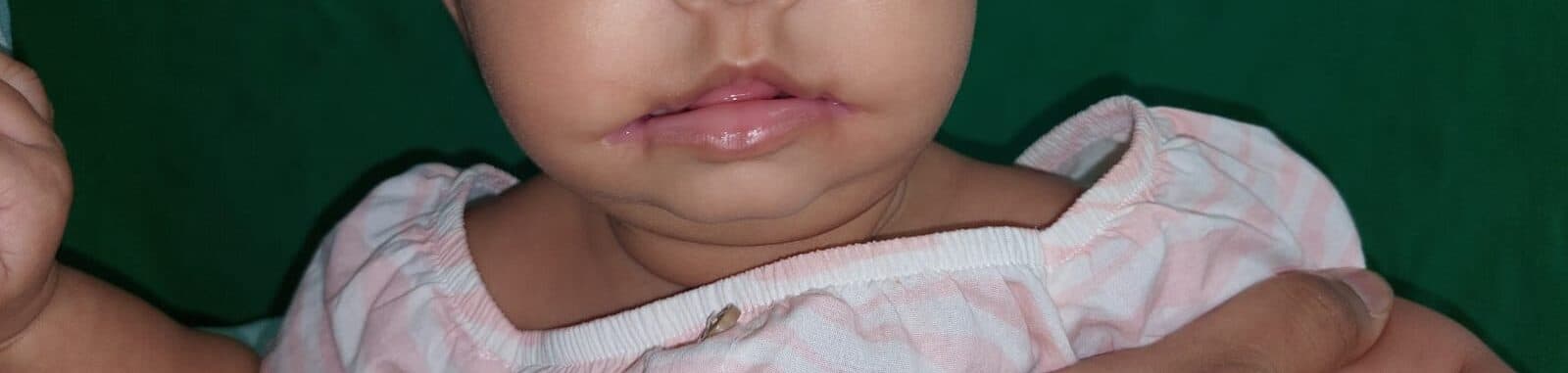
A unilateral cleft of the lip repaired in infancy, restoring the vermilion border and the alar base, with the lip competent and the scar settling at follow-up.
Cleft surgery · Face · Infant · 5 min read
- Mechanism
- Congenital
- Anaesthesia
- General
- Stages
- Primary repair; palate addressed separately
Presentation
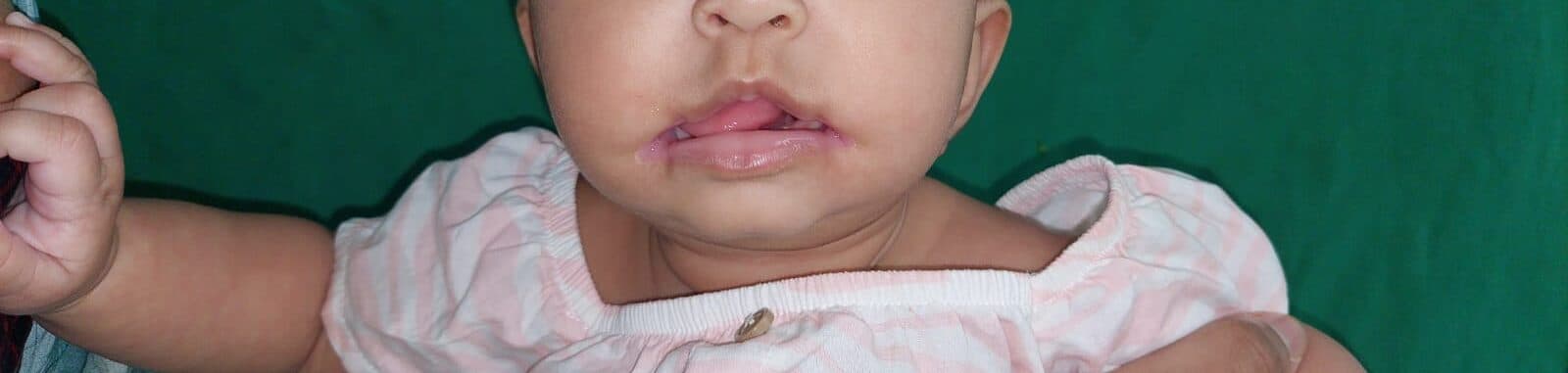
The child was brought with a unilateral cleft of the lip. Families ask two things: whether the child will be able to feed, and whether the lip will look normal. Feeding is the immediate problem and is managed before any operation; appearance is the reason they travel, and it is decided largely by how accurately the landmarks are restored at the first repair.
Unilateral cleft of the lip with discontinuity of the orbicularis, an interrupted vermilion border and the alar base displaced laterally on the cleft side. Weight and feeding were assessed before surgery, since operating on an underweight infant serves the operating list rather than the child.
Procedure
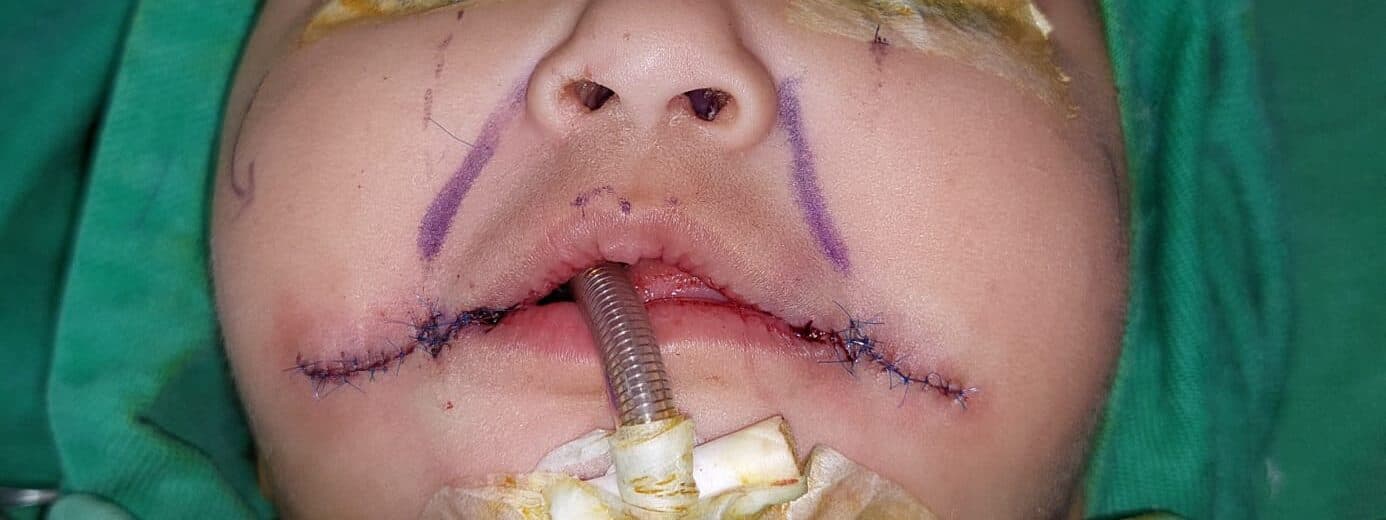
The repair was marked before any incision, because the operation is decided at the marking: the vermilion border, the peak of Cupid’s bow and the alar base are the landmarks the result is judged against, and once tissue is cut they cannot be re-established by eye. The orbicularis was repaired as a continuous muscle rather than simply closing skin over the gap — a skin-only closure looks acceptable at rest and fails visibly when the child smiles. The alar base was repositioned as part of the same repair.
- PresentationAssessment; feeding support and nutritional review
- RepairPrimary lip repair once weight-appropriate
- Follow-upScar maturing; lip competent
Outcome
The lip healed with the vermilion border continuous and the alar base symmetrical, and the scar was settling at follow-up. Speech, palate surgery where needed, and long-term appearance through growth are placeholder and await the surgeon’s records.
Clinical images are blurred until you choose to view them. Each is labelled with its timepoint.
Placeholder — to be replaced with the words of the child’s parents, given with consent.
Surgeon's note
What decides a cleft lip result is the marking, and what decides how it ages is the muscle repair. A skin closure is quicker and looks similar on the table; it is not the same operation, and the difference shows the first time the child smiles. The other point families should be told plainly is that the lip is one part — the palate, speech, and dental work follow over years, and a programme that repairs the lip and then loses the child to follow-up has done half the job.
Consent
CONSENT PENDING — this photograph is published for build purposes only and must not go live until written consent is on file. Parental consent is required for a paediatric case.
These cases are published for clinical and educational purposes. Every patient, injury and recovery is different: the results shown are individual outcomes and are not a prediction or guarantee of the result of any other person’s treatment. All surgery carries risk, which is discussed in full during consultation.